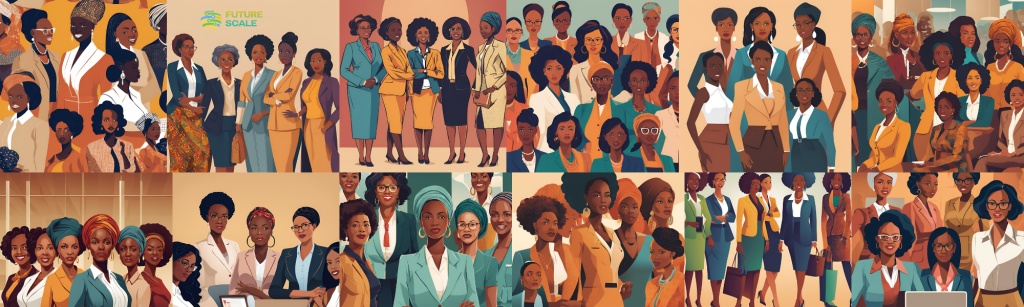
August is Women’s Month in South Africa, a time dedicated to celebrating the achievements and contributions of women across all sectors. What better way to honour this occasion than to reflect on the remarkable journey of African women in the marketing industry over the past 30 years? This retrospective view explores the milestones, challenges and progress made by African women in creative leadership roles within South Africa’s marketing landscape.
Historical Context: Pre-1994
Before the end of apartheid in 1994, South Africa’s marketing industry, like many other sectors, was characterised by racial and gender disparities. African women were largely excluded from professional roles, relegated to low-paying, menial jobs. Marketing, dominated by white males, offered limited opportunities for African women to advance their careers.
The 1990s: Breaking Barriers
The dismantling of apartheid brought legislative changes aimed at redressing past injustices. The Employment Equity Act of 1998 played a crucial role in promoting gender and racial equality in the workplace. African women began to enter the marketing space, albeit slowly. Pioneers like Thebe Ikalafeng, who co-founded Brand Leadership, paved the way for others by challenging the status quo and demonstrating the potential of African talent in marketing (Ikalafeng, 2008).
The 2000s: Establishing a Presence
The early 2000s saw a more pronounced presence of African women in marketing. Initiatives such as the Black Economic Empowerment (BEE) programme and the Broad-Based Black Economic Empowerment (B-BBEE) Act of 2003 provided frameworks for inclusivity. Companies were incentivised to employ and promote African women, resulting in increased representation at various organisational levels.
One notable figure is Phumi Mashigo, who became a prominent advertising executive and co-founder of Ignitive, a Johannesburg-based advertising agency. Her success exemplifies the growing influence of African women in the industry, challenging stereotypes and setting new standards for leadership (Mashigo, 2011).
The 2010s: Leadership and Influence
The 2010s marked a period of significant achievements for African women in marketing. A report by the Businesswomen’s Association of South Africa (BWASA) in 2017 highlighted that women held 29% of executive management positions in the marketing sector, with African women comprising a substantial proportion of this demographic (BWASA, 2017).
African women began to occupy senior leadership roles, influencing marketing strategies and corporate governance. For example, Nunu Ntshingila-Njeke, who served as the Chairman of Ogilvy & Mather South Africa, later became the Head of Facebook Africa, illustrating the expanding opportunities for African women in global marketing spheres (Ntshingila-Njeke, 2015).
The 2020s: Digital Transformation and Entrepreneurship
The ongoing digital transformation has further reshaped the marketing landscape, offering new avenues for African women. Digital marketing, social media and e-commerce have created opportunities for entrepreneurship and innovation. African women are leveraging these platforms to build brands and reach diverse audiences.
An example would be influential professionals, who have used digital platforms to promote African stories and perspectives, thereby enhancing the visibility of African women in media and marketing.
2024: Continued Progress and Leadership
By 2024, the percentage of African women in creative leadership roles has further increased. Recent data from the Association for Communication and Advertising (ACA) indicates that African women now hold around 45% of these positions, reflecting a continued commitment to diversity and inclusivity within the industry (ACA, 2024). This progress can be attributed to various initiatives aimed at empowering women, such as targeted leadership development programmes, mentorship schemes and the increasing influence of women-led networks.
In addition to the growth in numbers, the impact of African women in leadership positions has become more pronounced. For instance, Boniswa Pezisa, the CEO of Network BBDO and former chairperson of the Loeries, has been a vocal advocate for diversity and inclusion within the advertising industry. Her leadership has driven significant changes in how the industry approaches creative work, ensuring it reflects the diverse South African society (Pezisa, 2024).
Moreover, the rise of entrepreneurial ventures has further expanded opportunities for African women. Initiatives such as the Siyakha Women’s Trust, which provides funding and support for women-owned businesses, have enabled more African women to establish and grow their own marketing agencies (Siyakha Women’s Trust, 2024).
Progress Overview
1990s = < 5%
2000s = 10-15%
2010s = 25-30%
2020s = 35-40%
2024 = 45%
Challenges and Opportunities
Despite significant progress, African women in marketing still face challenges, including gender biases, unequal pay and limited access to funding for entrepreneurial ventures. However, the rise of female-focused networks and mentorship programmes, such as Women in Marketing (WiM) Africa, is helping to address these issues by providing support and resources for professional growth (WiM Africa, 2021).
Conclusion
The evolution of African women in the marketing space in South Africa over the past 30 years is a testament to resilience and progress. From breaking barriers in the 1990s to leading digital transformation in the 2020s, African women have made remarkable contributions to the industry.