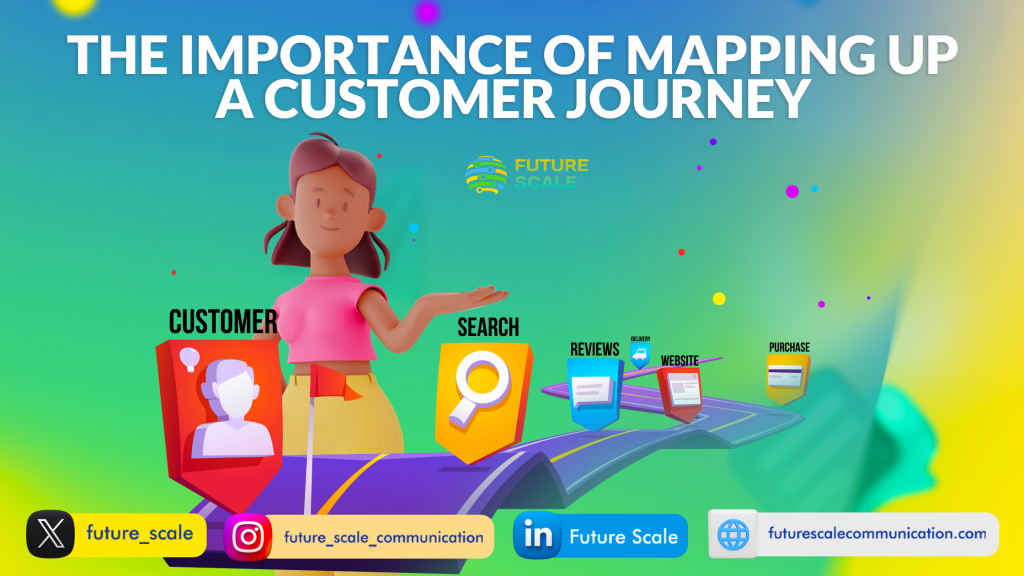
In the rapidly evolving South African market of 2024, characterised by significant digital transformation and increased automation, mapping out a good customer journey is more crucial than ever. South African consumers are becoming increasingly tech-savvy, with high expectations for seamless and personalised experiences. Here’s why a well-mapped customer journey is essential in this context:
- Enhanced Customer Experience Through Digital Touch points : Digital and automated touch points are becoming more prevalent in South Africa. A well-mapped customer journey allows businesses to leverage these technologies to create smoother and more engaging experiences. This includes optimising websites, mobile apps, and automated customer service channels to meet customer needs efficiently. A study by Johnson et al. (2023) found that companies investing in digital touchpoint optimisation saw a 20% increase in customer satisfaction scores (Johnson et al., 2023).
- Personalisation and Customer Loyalty: Personalisation is key to customer loyalty in 2024. By mapping the customer journey, businesses can gather detailed data on customer preferences and behaviours. This data enables the creation of personalised experiences, from tailored marketing messages to customised product recommendations, fostering stronger customer relationships. Research by Smith and Koster (2024) indicates that personalised customer journeys can increase customer retention by up to 15% (Smith & Koster, 2024).
- Optimised Digital Marketing Strategies: Understanding the digital customer journey is essential for effective digital marketing. Businesses can use insights from journey mapping to develop targeted online campaigns, utilise social media platforms more effectively, and improve their search engine marketing efforts. This ensures that marketing resources are used efficiently and yield higher returns. According to a report by the South African Digital Marketing Association (2023), businesses that leverage customer journey insights for their marketing strategies achieve a 30% higher ROI on digital marketing campaigns (South African Digital Marketing Association, 2023).
- Informed Decision-Making with Data Analytics: Journey mapping in the digital age provides extensive data that can be analysed to gain deeper customer insights. Businesses can identify trends, predict future behaviours, and make informed decisions to enhance the customer experience. This data-driven approach is particularly relevant in South Africa, where consumer behaviours are diverse and rapidly changing. A report by McKinsey & Company (2023) highlights that companies using advanced analytics for customer journey mapping saw a 25% improvement in decision-making efficiency (McKinsey & Company, 2023).
- Seamless Omni-channel Experience: South African consumers in 2024 expect a seamless experience across multiple channels, whether online or offline. A good customer journey map helps businesses ensure that all channels are integrated and provide a consistent experience. This is vital for maintaining customer satisfaction and loyalty in a competitive market. Deloitte’s 2023 survey of South African consumers found that 70% prefer brands that offer a seamless omni-channel experience (Deloitte, 2023).
- Adaptation to Local Market Conditions: Mapping the customer journey allows businesses to understand and adapt to the unique characteristics of the South African market. This includes addressing specific customer pain points related to local infrastructure, economic conditions, and cultural preferences. Businesses that tailor their customer journeys to these factors can better meet customer needs and stand out in the market. According to a 2024 report by the South African Chamber of Commerce, companies that localised their customer journey saw a 20% increase in market share (South African Chamber of Commerce, 2024).
- Increased Sales and Revenue Through Automation: Automation technologies, such as chatbots and AI-driven customer support, can enhance the efficiency of the customer journey. By integrating these technologies into the journey map, businesses can provide quicker responses, resolve issues faster, and ultimately drive higher conversion rates and sales. Research by PwC (2023) shows that automation in customer service can increase sales conversion rates by 18% (PwC, 2023).
- Gaining Competitive Advantage: In the South African market of 2024, where digital and automation technologies are advancing rapidly, businesses that invest in mapping and optimising the customer journey can gain a significant competitive advantage. Providing a superior customer experience can differentiate a brand and attract more loyal customers in a crowded marketplace. A 2023 report by Forrester Research found that companies prioritising customer journey mapping outperformed competitors by 20% in revenue growth (Forrester Research, 2023).
We wanted to share a Case Study on two big South African brands and our observation on the implementation of customer journey mapping (the good and not so good) – those being Takealot and Telkom. The “TT” obsession:
Successful and evident approach:
Takealot, South Africa’s leading online retailer, exemplifies the importance of a well-mapped customer journey. By focusing on seamless digital experiences, efficient delivery systems, and personalised recommendations, Takealot has built a loyal customer base and maintained a strong market presence amidst growing competition. The company’s strategic emphasis on customer journey mapping has been credited with a 25% increase in customer retention rates over the past two years (BusinessTech, 2023).
The Pitfalls of a Poorly Mapped Customer Journey:
Telkom, one of South Africa’s major telecommunications providers, illustrates the negative implications of a poorly mapped customer journey. Telkom has faced numerous customer complaints regarding long wait times, inadequate customer support, and inconsistent service delivery. These issues stem from a lack of integration across digital and physical touchpoints and insufficient use of customer data to personalise experiences.
Implications:
Customer Dissatisfaction and Attrition: Frustrated customers are more likely to switch to competitors offering better experiences. A 2023 article in MyBroadband highlighted Telkom’s customer attrition rate, which increased by 15% due to poor customer service (MyBroadband, 2023).
Negative Brand Reputation: Consistent negative feedback erodes brand reputation, making it harder to attract new customers. This was evident in a 2023 survey by the South African Customer Satisfaction Index, where Telkom ranked among the lowest in customer satisfaction (South African Customer Satisfaction Index, 2023).
Lost Revenue Opportunities: Inefficiencies and missed opportunities for upselling or cross-selling lead to reduced revenue. Telkom’s 2023 financial report showed a decline in revenue attributed to poor customer retention (Telkom, 2023).
Increased Operational Costs: Handling complaints and resolving issues manually increases operational costs, which could be mitigated with better journey mapping and automation. PwC’s 2023 analysis revealed that Telkom’s operational costs increased by 10% due to inefficiencies in customer service (PwC, 2023).
Conclusion
In the dynamic and digitally-driven South African market of 2024, mapping out a good customer journey is essential for business success. By leveraging digital and automation technologies, understanding local market conditions, and focusing on personalisation, businesses can enhance customer satisfaction, loyalty, and overall performance. A well-optimised customer journey is not just a strategic advantage but, a critical necessity in this rapidly evolving landscape. Conversely, neglecting this aspect can result in significant negative implications, as evidenced by Telkom’s challenges.